
"I didn't know flats could look this majestic!"
That was my first thought in 2009, when I went to the Ölberg neighbourhood in Wuppertal (Germany) for the first time. My circle of mainly university friends had invited me to one of the first Ölbergfeste. I went. With no plan, no expectations, which is why I must have been amazed by everything I saw. The Jugendstil architecture, those impossibly tall buildings with their ornate facades and large windows seemed to lean into the steep slopes of the neighbourhood; almost as if they were holding the whole thing together.
People sometimes call Ölberg the San Francisco of Germany. And to be honest, I get it now. San Francisco has those famous hills, a steep topography that makes your calves work for every stride. But there's something about how Ölberg's architecture responds to those slopes, how those Jugendstil buildings don't fight the incline but lean into it, almost embracing it. It's the same defiant geography, the same refusal to flatten itself out for our convenience.
The buildings caught me in my tracks in 2009. As did the people. Couches dragged onto the street. Students spilling out of shared flats in clusters, laughing at volumes that only happened in summer. Bodies flat on the tarmac at midnight, still talking, still awake, as if the 10:00 p.m. German sunset had just invited them to stay a little longer. There was a kind of freedom in it, but only the kind you recognise when you're young enough to think it's normal.
That festival was my introduction to the Ölberg neighbourhood. I've been living in Wuppertal for 20 years now, and over this past decade and a half, I've spent countless hours learning that the real Ölberg isn't found in the crowds.
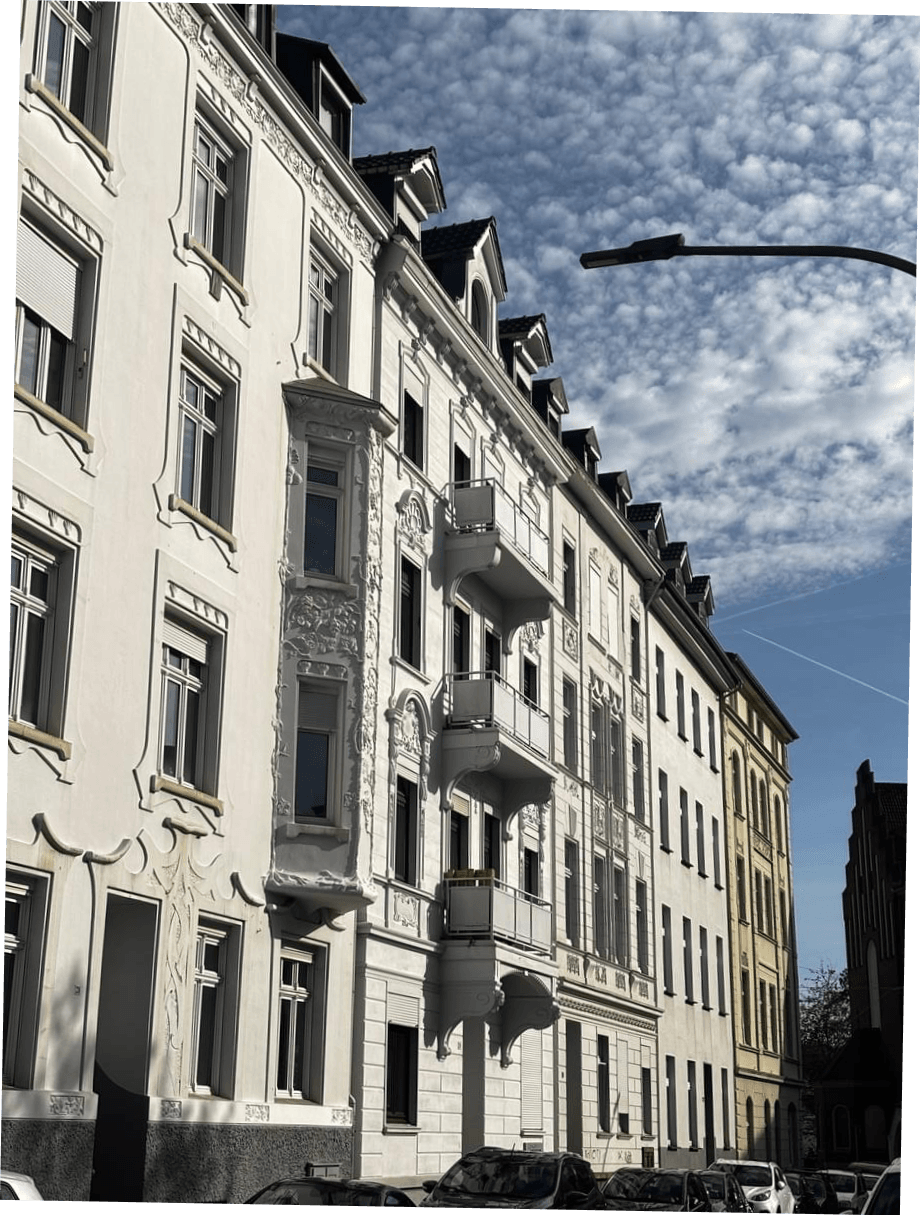
The everyday Ölberg
I keep coming back to Ölberg. Mainly for the version of this neighbourhood that exists on ordinary Tuesdays, or any weekday.
The galleries tucked into ground floors. The old storefronts that haven't been renovated into anonymity; they still look lived-in and still look like they're being used. The cafés and restaurants where you'll hear German, Turkish, Kurdish, Arabic, and English all at once, not in translation, but in the easy bilingual code-switching of people who belong to multiple places at once.
Walk the narrow, winding roads and you'll find shared flats stacked on top of each other. You'll find families which have been here for generations and know every corner, every shopkeeper, every corner store owner by name. And you'll find students, artists, young people trying to figure out who they are in a neighbourhood that understands that they are still figuring things out as they go along.
It's not polished. Ölberg doesn't care about being polished.
A Neighbourhood That Refuses to Apologize
This is what strikes me now, looking back across 15 years of visiting and 20 years of living in Wuppertal: Ölberg doesn't try to be anything other than what it is.
It's beautiful; genuinely, architecturally, historically beautiful. But it's not bossy about that beauty. The Jugendstil buildings aren't preserved behind velvet ropes. They're just there: galleries, households, arguments and laughter. The streets are imperfect. The parking is impossible.
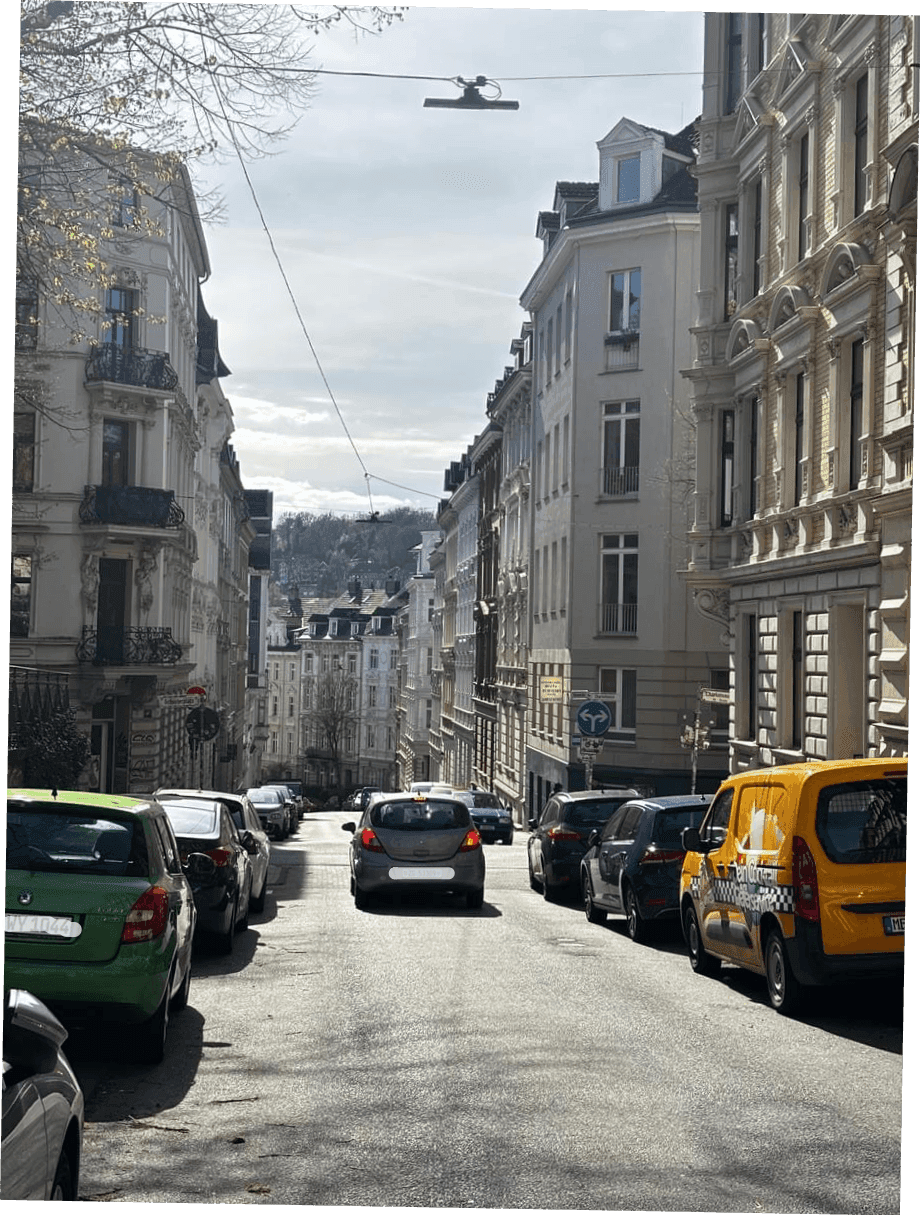
When I was new to this neighbourhood in 2009, trying to figure out who I was going to be, Ölberg was the place that said: you don't have to have it all figured out. The shared flats, the late-night conversations on the street, the galleries run by people who were also working as bartenders and teachers and builders—it all whispered the same thing: stay a little longer. Build something. Belong.
I did. I'm still here.
This Too Is Wuppertal
People have stories about Wuppertal. Most of them are reductive. They talk about the valley, the Schwebebahn, the history, the decline. They have opinions, usually negative ones, before they've actually looked closely at this multifaceted city.
But Ölberg is proof that Wuppertal refuses to fit into those neat narratives. This neighbourhood is messy and intentional, historically significant and actively alive. It's a place where the past isn't curated but rather just there, in the architecture, in the way the streets curve, in the accents you hear in the cafés.
This is Ölberg. This too is Wuppertal.
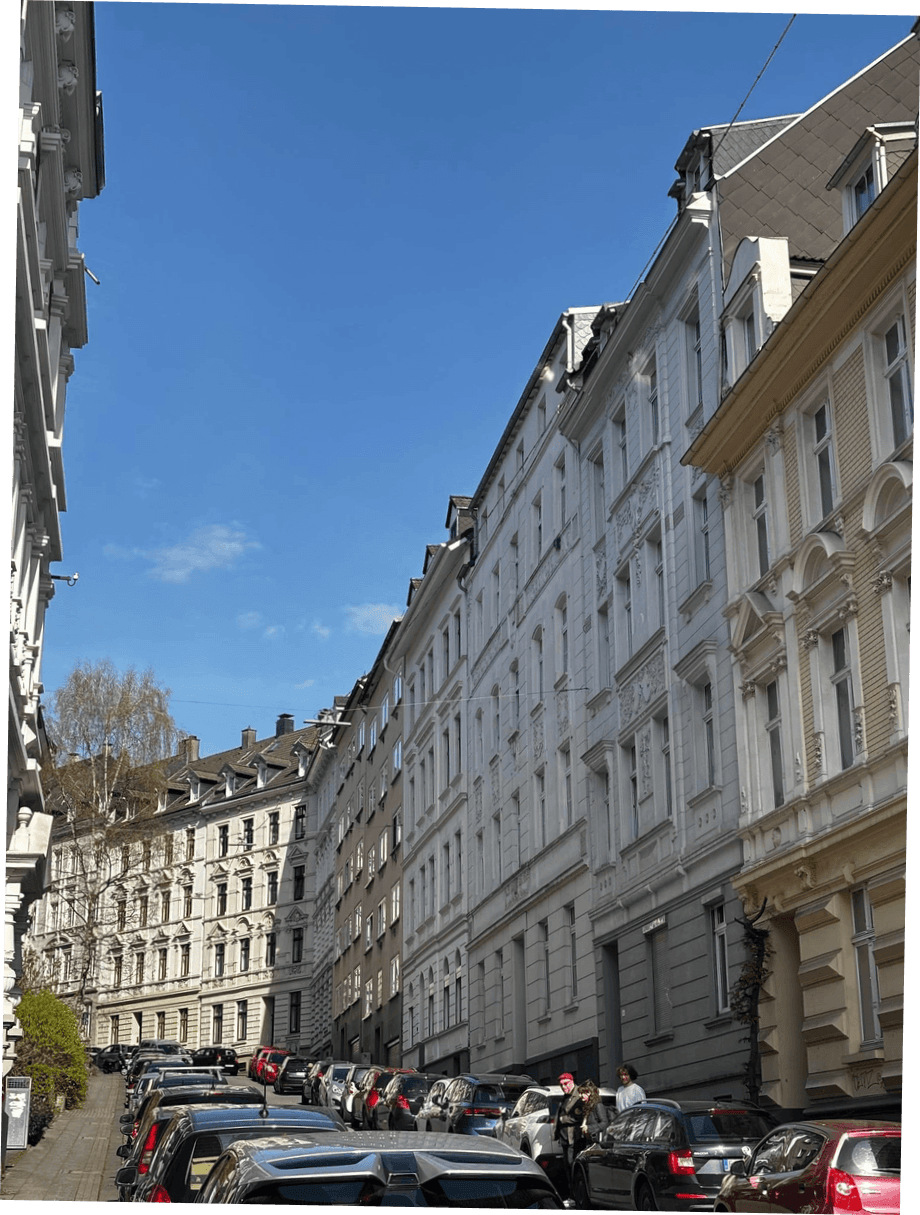
And if you haven't walked these narrow, winding roads yet, if you haven't sat on a café terrace and watched the Jugendstil buildings catch the afternoon light, if you haven't cursed the parking situation and then understood why it's actually a gift—you're missing the part of the city that actually means something.
Come for the San Francisco vibes. Stay for the neighbourhood that has remained true to itself - Ölberg is unapologetic.
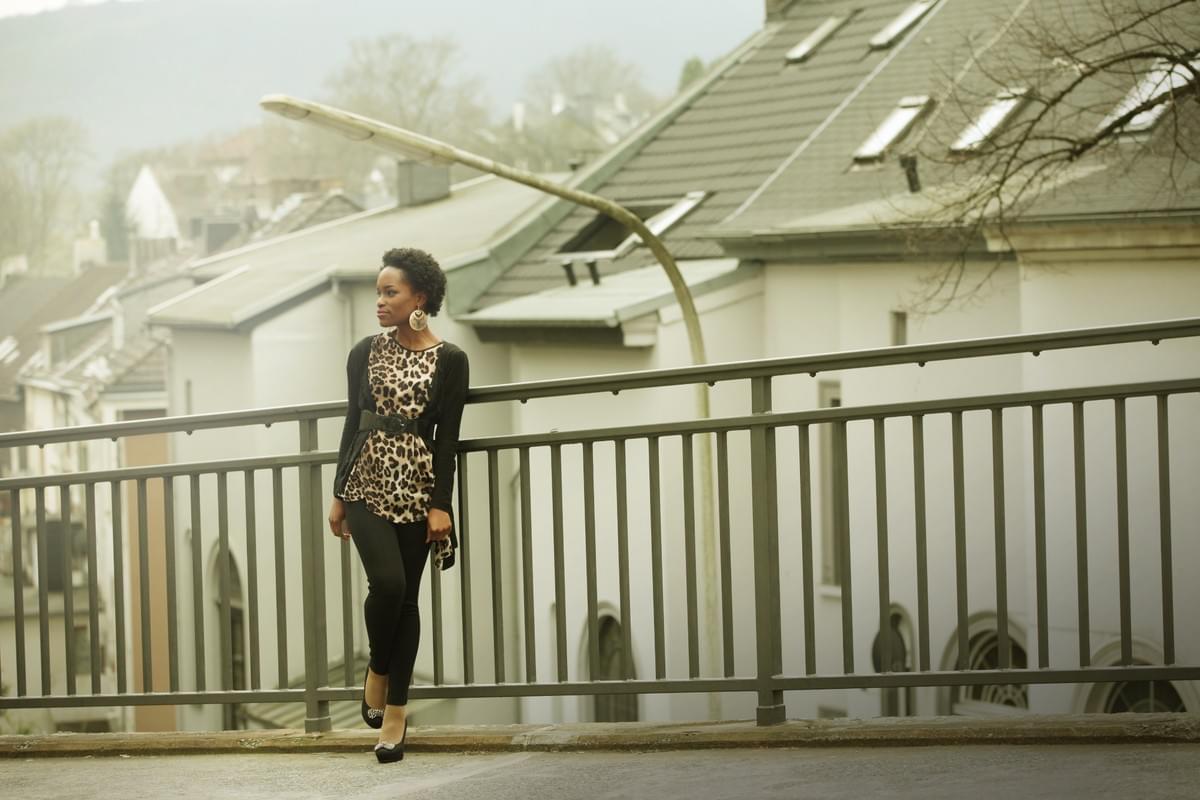
Dr. Mariam Muwanga (Wuppertal)
Mariam Muwanga is a PhD holder in the fields of (Black) British literature and cultural studies. She writes about life as a Black woman in Germany on her blog: www.afro-diasporan.com and runs an instagram account: @afro_diasporan where she showcases the hidden gems of her second home, Wuppertal (in Germany).