
Twenty years ago, when I was deciding on whether to move to Germany, I did what everyone does: I googled. I looked at photos of Wuppertal online. I scrolled through university's websites, travel blogs. And what I saw was... underwhelming. Grey. Industrial. The kind of city people move through, not to. The kind of place you'd settle for if nowhere better wanted you. And I remember thinking: Is this really where I want to spend the next years of my life?
But life doesn't always ask for your permission.
I had convinced myself and my family that I needed to go. It was my calling to go and start a life elsewhere. And a door had opened for me to go as an AuPair. In Wuppertal. There was a chance to learn German properly, to build something, to escape what felt suffocating back home in Uganda. So at 23, with a mix of resignation and desperation, I boarded a plane to this grey industrial city I'd already decided I wouldn't love.
I was wrong. So completely wrong.
The Briller Viertel changed everything
My AuPair placement was with a family living in the Briller Viertel. I remember the exact feeling of driving up the extremely steep and narrow road to the house for the first time. And I remember thinking: This cannot be Wuppertal. This cannot be the same city I saw online.
The Briller Viertel is where Wuppertal first whispered its secret to me: this city has gems everywhere. You just have to know how to look.
The neighborhood was stunning—I won't pretend otherwise. Gründerzeit villas rise up on quiet, tree-lined streets. Bay windows. Manicured gardens. The kind of architecture that speaks to a particular moment in history, when textile magnates shaped this region. For one year, I walked those streets every single day. I watched how the sunlight hit the majestic villas and how the sun rays glistened through the tree branches. I got used to listening to the silent sound of a place where you can actually hear yourself think.
But there is something that the Briller Viertel taught me that mattered more than the villas themselves: Wuppertal is full of beautiful things. They just don't all look the same.
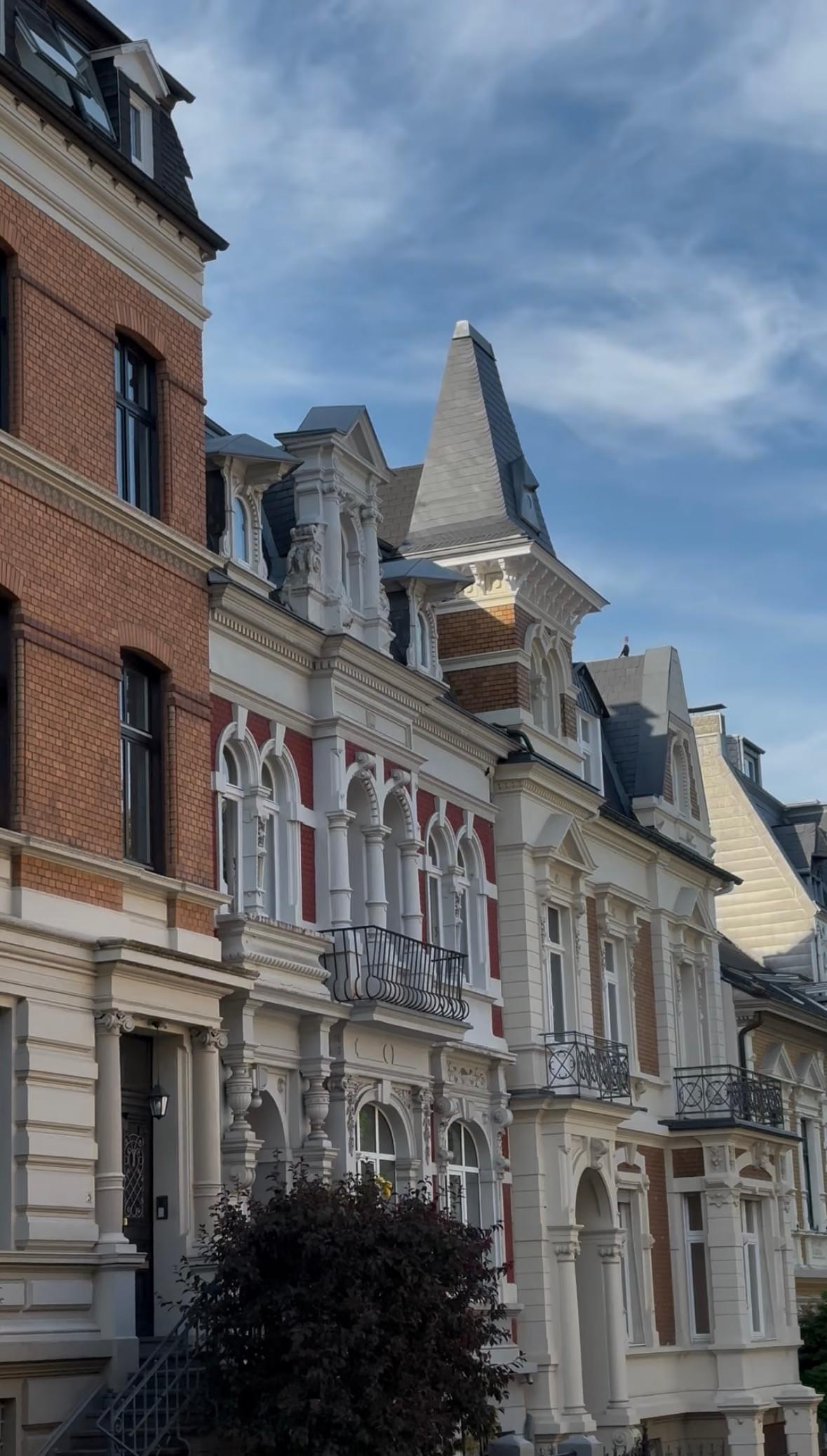
Beauty isn't just found in one neighbourhood
Once I moved out of the Briller Viertel, I started discovering the rest of the city. And yes, Wuppertal looks different in other areas. The architecture changes. The energy shifts. But the gems are still there—you just have to train your eye to see them.
There's beauty in the old factory buildings. Some have been turned into artist studios others have been repurposed. There's character in the residential neighbourhoods like the Ölberg, Quartier Mirke, Loh, and Unterbarmen with their own distinctive style—different from the villas, but special in their own way. There's life and community and real human stories happening in every corner of this city, not just the quiet, manicured ones.
What the Briller Viertel gave me was a starting point. It showed me that Wuppertal isn't the grey, disappointing place the internet had promised. It proved to me that if this neighborhood could be this beautiful, then there had to be other beautiful things hidden throughout the city. Different things I hadn't seen yet.
And I was right.
What the internet didn't show me
Here's what happens when you actually live somewhere instead of just googling it: you discover that places are infinitely more complex than their reputation.
The internet showed me industrial zones - the Talachse. What it didn't show me was the creativity thriving in those spaces and in spaces beyond Wuppertal's Talachse. The underground art scene. The restaurants run by people who actually care. The neighbourhoods with their own distinct character and charm.
The internet didn't show me that beauty in Wuppertal comes in many forms. Not just villas and quiet streets. But also the warmth of diverse communities. The resilience of neighborhoods rebuilding themselves. The unexpected pockets of green space. The architecture that tells the story of what this city has been and what it's becoming.
The internet definitely didn't show me that I would fall in love with this place.
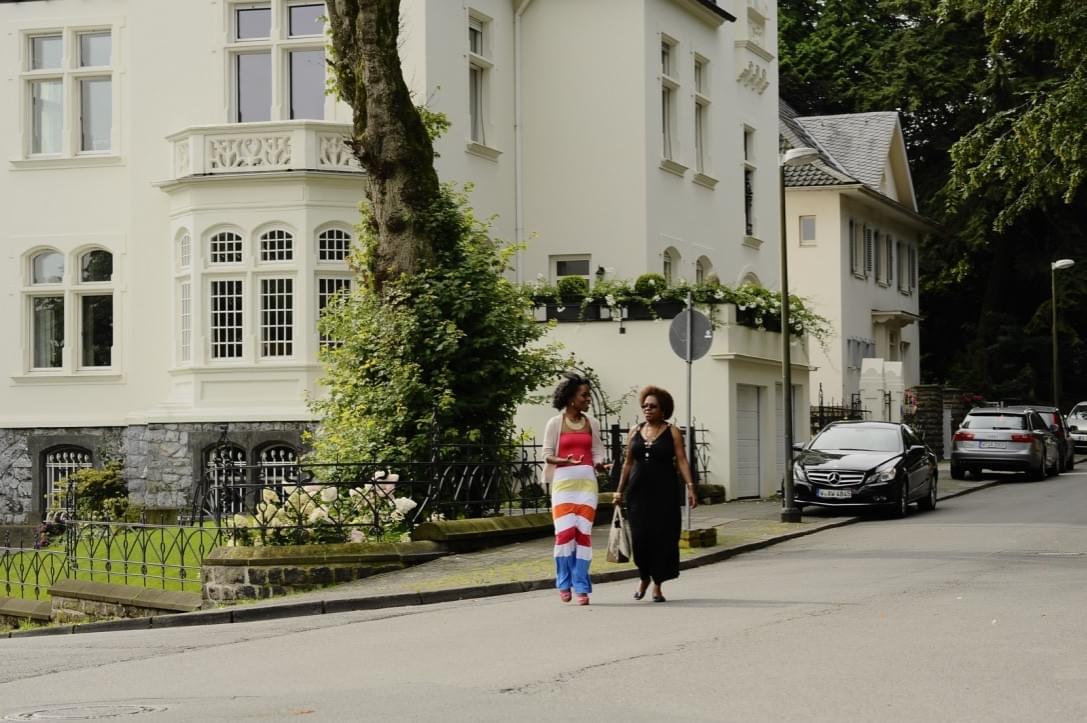
The city that said yes before I was ready
I think about this a lot, especially now—twenty years later, rooted here, building a life and a community in Wuppertal. I came here expecting to be disappointed. Expecting to go on to a better city, with better neighbourhoods. The grass is almost always greener on the other side, isn't it?
But instead, I have found a second home.
Wuppertal is not perfect. It is not a wealthy city nor is it exclusive. Wuppertal—this complicated, diverse, unpolished city—gave me something the internet never could have promised: space to become myself.
Space to be a Black woman from Uganda learning how to live in Germany on my own terms. Space to be uncertain and overwhelmed and gradually, quietly, find my footing. Space to discover that beauty doesn't announce itself, and that sometimes the places worth staying in are the ones that surprise you when you're not looking.
The Briller Viertel was my introduction to this life long process of re-discovering myself in a place far away from home. Those quiet streets and beautiful homes welcomed me when I had nowhere else to go. But Wuppertal—the whole, messy, real Wuppertal—is what taught me to stay.
The Briller Viertel and everything beyond it
I visit the Briller Viertel sometimes now, when I want to remember where I started. Those villas and steep winding roads are still beautiful. That quietness still feels like a gift.
But my love for Wuppertal isn't about that one neighborhood anymore. It's about the entire city. It's about understanding that gems come in different forms. That a city's beauty isn't measured by how wealthy its neighborhoods are, but by how alive it feels. How it welcomes people. How it lets them belong.
Every time I walk through a different part of Wuppertal—the busy, loud, working neighborhoods, the areas still figuring themselves out, the pockets of unexpected green and history—I think about that 23-year-old girl who almost didn't come. Who googled this city and saw nothing worth staying for.
I'm grateful she was wrong.
Twenty years later, I'm still discovering new things about this city. Still finding new reasons to love it. Still uncovering those gems that exist everywhere, if you know how to look. And I'm pretty sure that's the whole point of home, isn't it? Not the perfect neighborhood but rather the city that finds you anyway.
By Dr. Mariam Muwanga (Wuppertal)
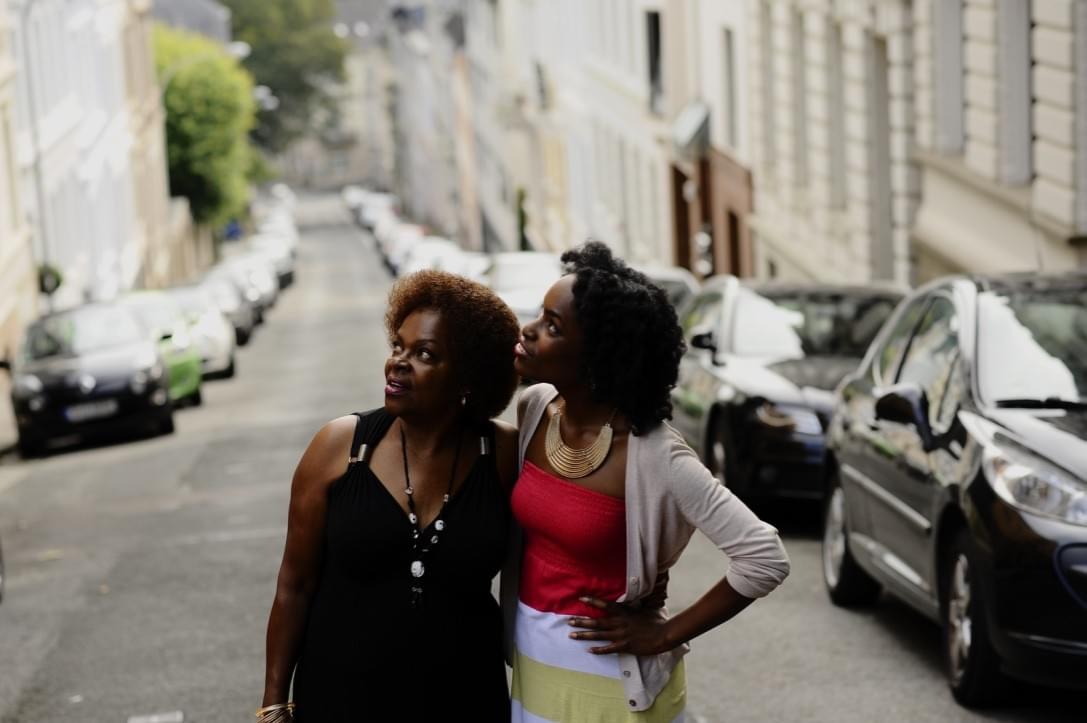
Mariam Muwanga is a PhD holder in the fields of (Black) British literature and cultural studies. She writes about life as a Black woman in Germany on her blog: www.afro-diasporan.com and runs an instagram account: @afro_diasporan where she showcases the hidden gems of her second home, Wuppertal (in Germany).
